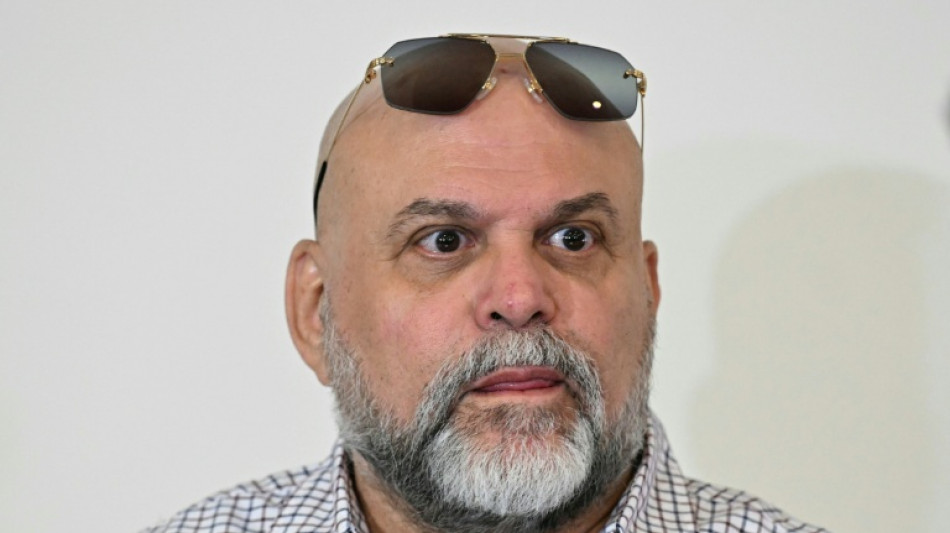
Colombian paramilitary-turned-peace-envoy sentenced over atrocities / Photo: © AFP/File
A Colombian ex-paramilitary leader, who was appointed a peace negotiator by President Gustavo Petro, was sentenced to 40 years in prison on Monday for murders and other crimes committed at the height of the country's armed conflict.
Salvatore Mancuso was tapped to help mediate peace talks with the country's biggest drug cartel in 2024, after returning home from the United States, where he had served a 16-year prison sentence for drug trafficking.
A court in the Caribbean city of Barranquilla on Monday convicted him of 117 crimes against the Wayuu Indigenous people, who live in the country's remote desert north, between 2002 and 2006.
Mancuso, who has both Colombian and Italian citizenship, had yet to react to his conviction.
He was also ordered to pay a $14 million fine.
Paramilitary groups emerged in the 1990s in Colombia to fight Marxist guerrillas, like the now defunct FARC, which had taken up arms against the state two decades earlier in rural areas.
Both the guerrillas and paramilitaries adopted cocaine as their main source of income -- setting the stage for deadly turf wars that continue to this day.
Mancuso was second-in-command of the far-right death squads of the United Self-Defense Forces of Colombia (AUC).
The paramilitaries sowed terror by massacring and persecuting those they claimed had ties to the guerrillas.
Their victims included union members, Indigenous leaders, human rights defenders, and politicians.
According to prosecutors, between 2002 and 2006, the AUC "perpetrated homicides, forced disappearances, forced displacements" and other crimes under Mancuso's orders in the department of La Guajira, bordering Venezuela.
Mancuso's sentence could be reduced to eight years if he complies with a restorative justice law.
The law, which paved the way for the disarmament of the paramilitaries in 2006, allows for more lenient sentences for those who engage in full disclosure about their crimes and agree to acts of restorative justice.
Mancuso, 61, is currently serving as a facilitator in the government's negotiations with the Gulf Clan, the country's biggest drug cartel, which grew out of the paramilitary movement.
As a peace envoy, his prison sentence could be suspended.
In 2008, he was extradited to the United States, where he spent 16 years behind bars for drug trafficking.
On his return, he was released by order of the Colombian justice system.
Over a quarter of a million people were killed during six decades of armed conflict between left-wing guerrillas, drug traffickers, paramilitaries, and state agents in Colombia.
The violence decreased dramatically after the Revolutionary Armed Forces of Colombia (FARC), the country's biggest rebel group, agreed to lay down arms in 2016.
But FARC dissidents opposed to the peace deal continue to fight other groups for control of Colombia's lucrative cocaine trade and to carry out attacks on the security forces.
Colombia is the world's largest producer of cocaine.
B.Fuchs--NRZ